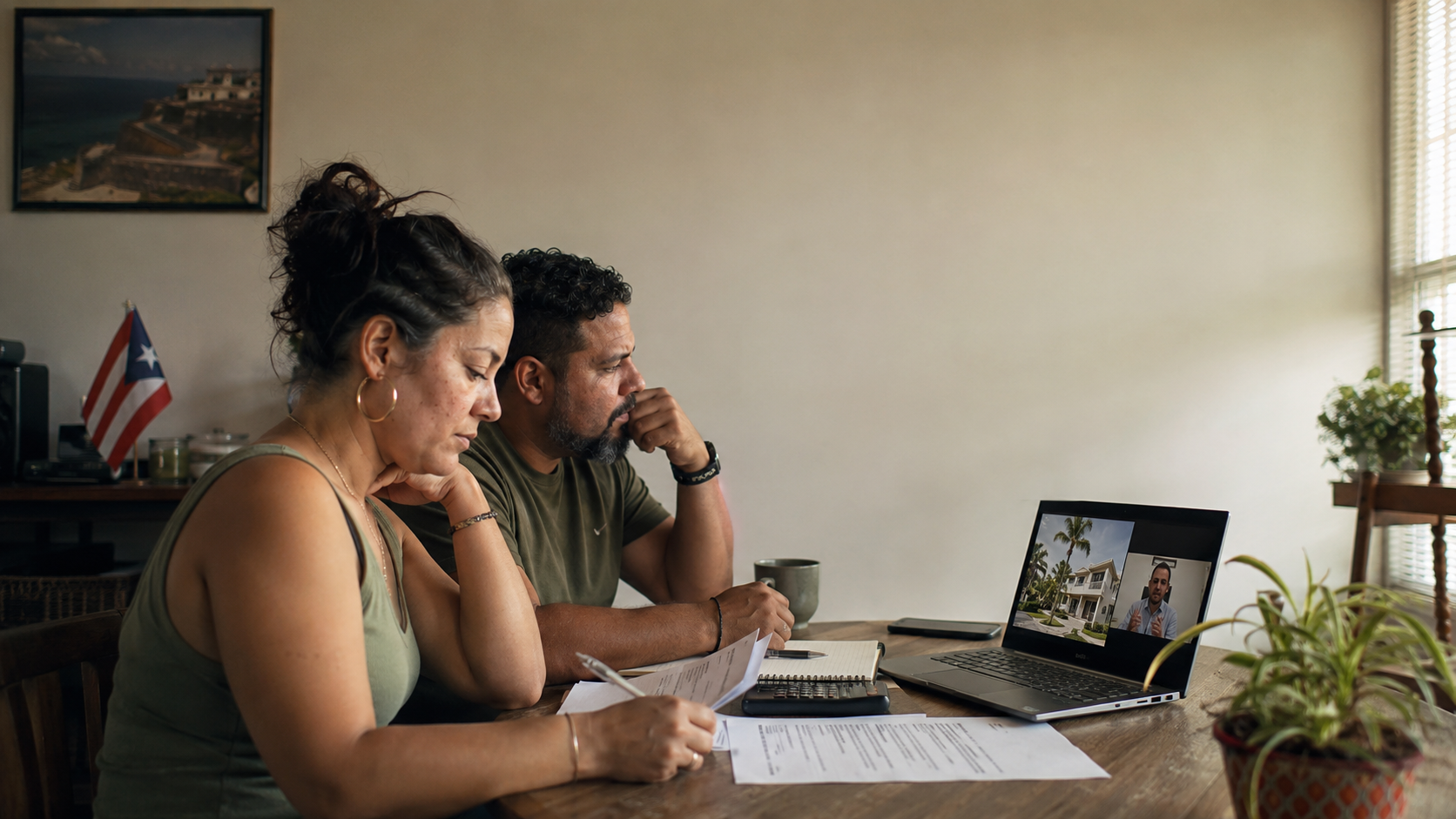
The biggest myth in the diaspora’s head is that buying in Puerto Rico means showing up with all cash. It doesn’t. Puerto Rico is the United States, so the federal loan programs work here, with no foreign-buyer restrictions. But there’s one trap that costs mainland buyers their deal, and it’s worth knowing before you fall in love with a listing.
What loans can I use to buy in Puerto Rico?
As of 2026, qualified US-citizen buyers can use the same programs as the mainland:
- VA loan: 0% down for eligible veterans and service members, with no monthly mortgage insurance. Often the strongest tool on the board.
- USDA loan: 0% down in eligible rural areas, and much of the island qualifies as rural.
- FHA loan: as little as 3.5% down, with credit scores generally around 580 and up.
- Conventional loan: typically 5% or more down.
- Cash is still common for informal-title or fixer properties that won’t pass an appraisal.
Why won’t my mainland bank give me a Puerto Rico mortgage?
WATCH OUTHere’s the trap, and you should read it twice: many mainland banks will not write a mortgage on Puerto Rico property. Your bank in Texas that pre-approved you may not fund a single dollar on a house in Ponce. Buyers have lost deals discovering this mid-contract.
You work with lenders that actually close on the island. The major ones as of 2026 include Banco Popular, FirstBank, and Oriental Bank. Get a real pre-approval from one of them before you make an offer, not a mainland pre-approval that evaporates at closing.
How much do I need for a down payment?
YOUR WIN TODAYThat depends on the loan, but the range runs from 0% (VA or USDA) to 3.5% (FHA) to 5% or more (conventional). Here’s the one real win today: match the loan to your situation and get pre-approved by an island lender first. A veteran with a VA loan can buy with nothing down; a rural property may qualify for USDA; a fixer might need cash or a renovation loan. Knowing which door is yours, before you shop, is what turns a dream into an accepted offer.
The part this post can’t fully give you
The loan type is the start. The full path is which lender fits which property, how the notario and escritura work at closing, how CRIM property tax and the residential exemption change your monthly number, and how to structure everything from the mainland. That’s the difference between “pre-approved” and “closed.”
The loan is the door. Here’s how to walk through it.
This post names the loans. The Buying Guide walks pre-approval to keys: matching VA, FHA, USDA, and conventional to your situation, finding a lender who actually closes in Puerto Rico, and budgeting CRIM and closing costs. Fillable checklists included.
In plain English. For la familia.
Get the Complete Guide — $29Educational only, not financial advice. Loan terms change. Confirm current numbers with a licensed PR mortgage lender.
Leave a Reply