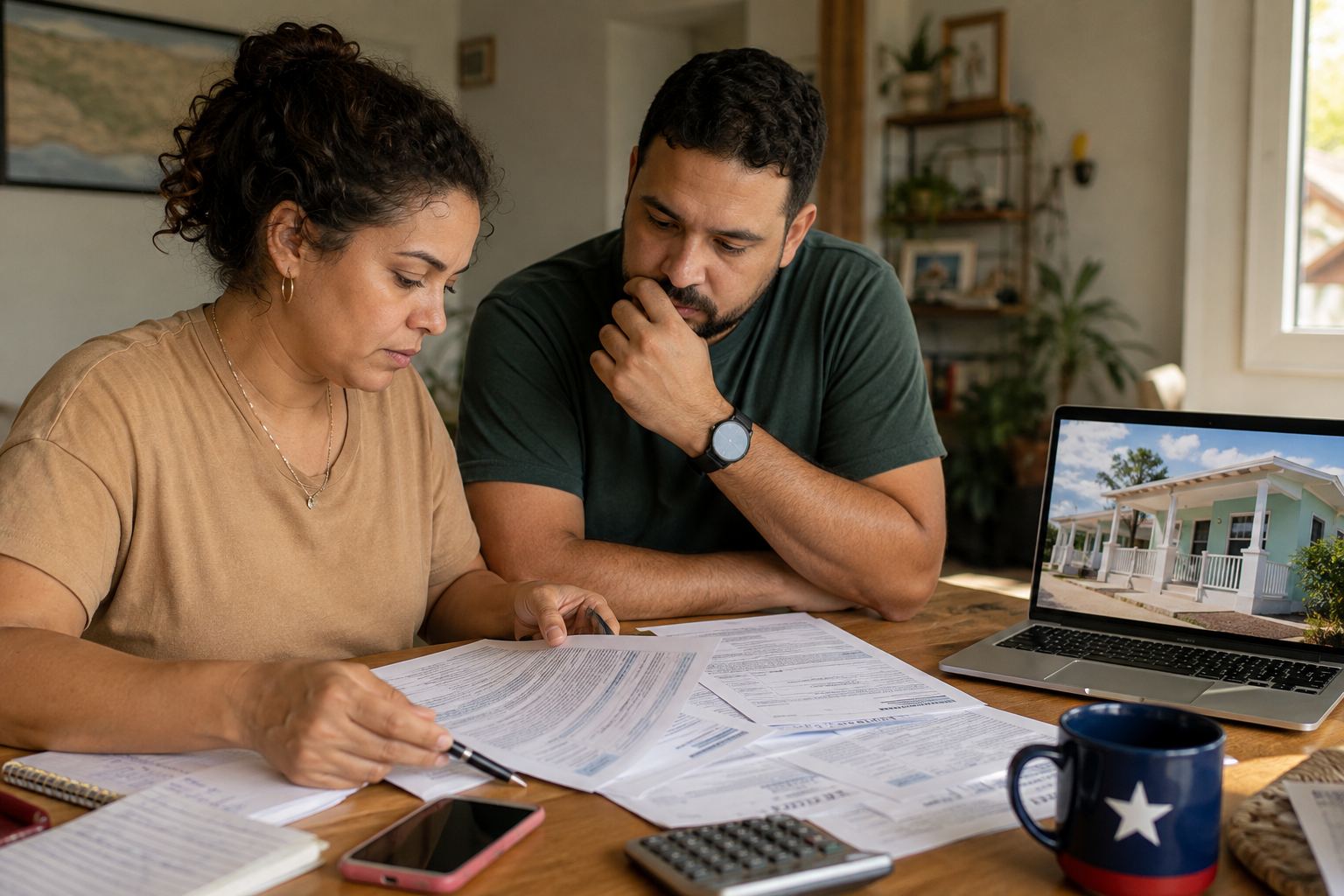
No. You do not need all cash. But buying in Puerto Rico is not identical to buying in Ohio, and the one assumption that trips up the diaspora costs people their deposit.
Let’s clear it up.
What kind of loan can I use to buy a home in Puerto Rico?
Good news first: Puerto Rico is the United States, so the federal loan programs work here.
As of 2026, qualified buyers can use conventional loans (Fannie Mae and Freddie Mac), FHA, VA, and USDA financing on the island. Roughly:
- VA loan: 0% down for eligible veterans and service members. If there’s a veteran in your family, this is often the strongest tool on the board. (It’s the exact combination our founder’s own family is using.)
- USDA loan: 0% down in eligible rural areas, and a lot of Puerto Rico qualifies as rural.
- FHA loan: as little as 3.5% down, with credit scores accepted roughly in the 500s to 580 range depending on the down payment.
- Conventional loan: minimum around 5% down in Puerto Rico (slightly higher than the 3% floor you’d see on the mainland), typically a 620+ credit score.
- Jumbo / portfolio loans for higher-value properties: expect 20% to 30% down.
Most lenders want a debt-to-income ratio at or under about 43%. Same paperwork discipline as the mainland: steady income, documented, clean credit.
What’s the 203k loan and why does it matter for the diaspora?
The FHA 203k is a rehabilitation loan. It lets you roll the purchase price and the cost of fixing the property into a single mortgage. You’re not buying a finished house and then scrambling for cash to repair it. You’re financing the repairs into the loan itself.
Think about what that unlocks for us specifically. All those tired, half-abandoned properties. The estorbo público down the street from tía. The house that needs a roof and a kitchen but sits on land worth three times the asking price. A 203k is how a diaspora buyer turns a distressed property into a home without a suitcase of cash. Pair it with the abandoned-property path we wrote about in “There Are Abandoned Properties in Puerto Rico the Government Can Help You Buy” and you start to see the whole game.
Why won’t my mainland bank give me a Puerto Rico mortgage?
Most US mainland banks do not lend on property in Puerto Rico. Your bank in Texas that pre-approved you? It may not fund a single dollar on a house in Ponce. Confirming that a lender actually lends in Puerto Rico is not a formality. It is a prerequisite. Buyers have lost deals and deposits because they got “pre-approved” on the mainland and then discovered, mid-contract, that nobody would actually close.
You work with lenders that operate on the island. The major ones as of 2026 include Banco Popular, Oriental Bank, and FirstBank, among others. Get a real pre-approval from a lender who closes Puerto Rico loans before you make an offer.
One more island-specific thing: Puerto Rico runs a civil-law property registry, not the common-law title system the mainland uses. Every sale is closed by a notario, who is a licensed attorney, not the notary who stamps your forms at the UPS Store. Your closing costs when financing typically land around 3% to 5% of the price, and you’ll want a estudio de título (title study) before you sign. Budget for it and it’s routine. Skip it and it’s a nightmare.
The part this post can’t fully give you
Getting the loan type right is the start. The full path is knowing which lender fits which property, how to structure a 203k so the rehab draws actually work from 1,500 miles away, how CRIM property tax and the residential exemption change your monthly number, what the notario actually does at closing, and how to read a title study so a lien in abuela’s name doesn’t blow up your deal.
That’s the difference between dreaming about a house on the island and holding the keys to one.

Leave a Reply