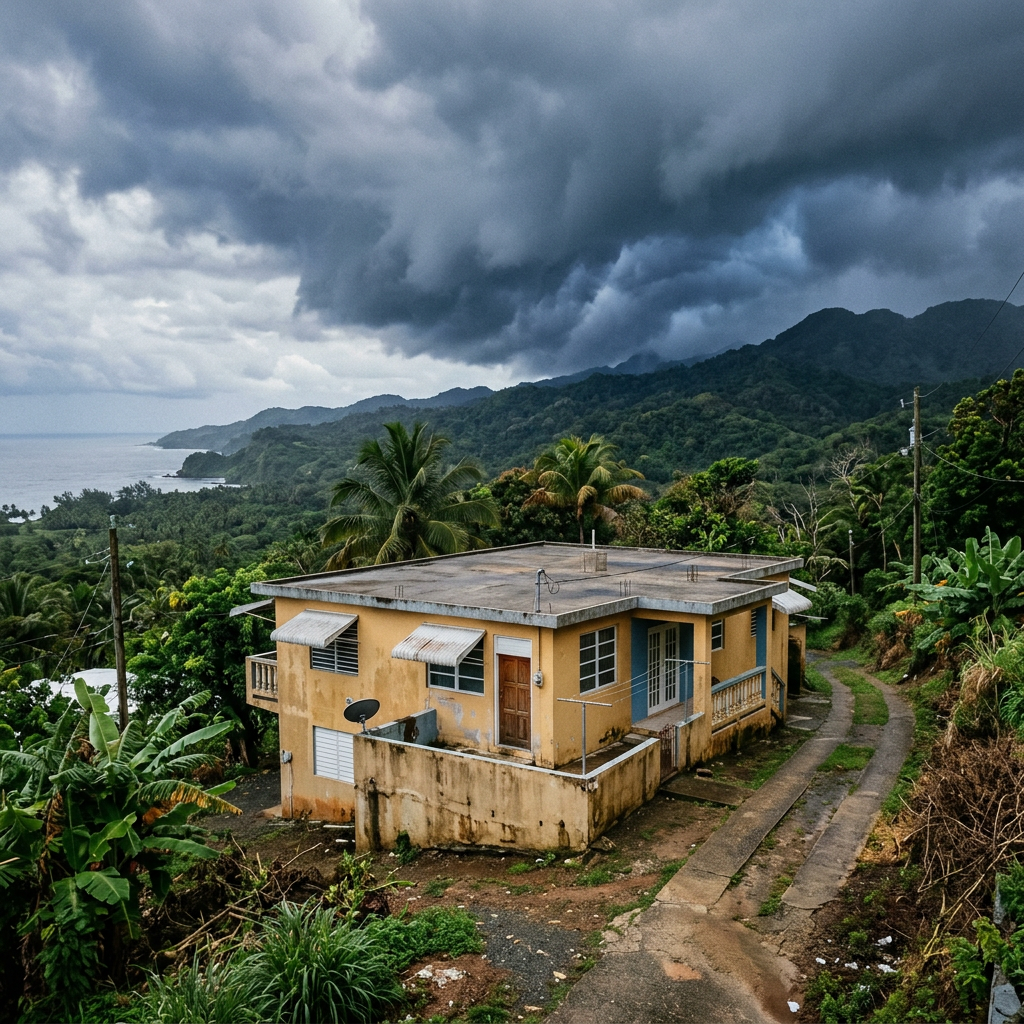
Let me tell you about my tía Gloria and the prettiest house she ever saw.
It sat right by the river. Big lot, mango trees, precio de regalo, the cheapest one she’d looked at all week. She called the whole family, all excited. “¡La encontré!”
Somebody should’ve asked why it was so cheap. Because the first time it really rained, that pretty river came right up into la marquesina. And it wasn’t the first time it had happened to that house. It was just the first time it happened to her.
I’m not telling you this to scare you, mija. I’m telling you because it’s hurricane season right now, and the smartest thing you can do before you buy or rent is pick a spot that’s built to take a hit. La isla is worth it. Vamos a hacerlo con los ojos bien abiertos.
Check the Flood Line First
This is la grande. Before you fall for a house, check the flood zone. Every time. Sin excepciones.
Near rivers, in the low spots, along parts of the coast, the water is the real enemy, not just the wind. Pull up the FEMA flood maps for that exact address, and ask the vecinos the honest question: ¿qué pasa aquí cuando llueve de verdad? A house that floods once will flood again, te lo prometo. And it changes everything after, your insurance, your resale, tu tranquilidad.
That beachfront dream is gorgeous. It’s also the first place the water comes to visit. Just know what you’re signing up for.
Then Look at How It’s Built
On the island, cómo está construida la casa matters as much as where it sits.
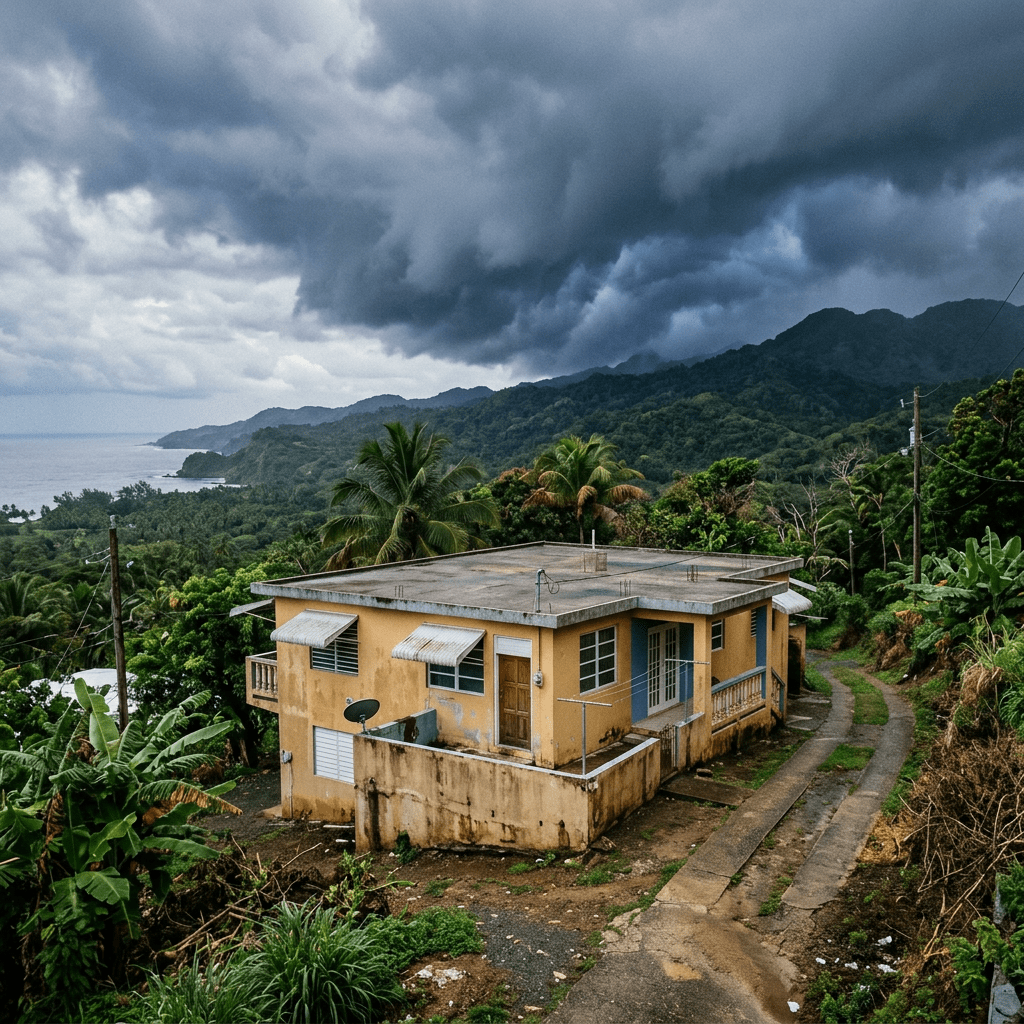
Concreto, hormigón, holds up to wind way better than wood or a zinc roof. Look at the roof especially, that’s the first thing a storm wants to take. Look at the windows, are there tormenteras (shutters) or room to add them? A solid concrete house on higher ground is a completely different bet than a cute little wood house sitting low by the coast.
If somebody hands you an older wood structure, eso no es un “no.” It’s a “price in the work and the reinforcement” antes de comprometerte.
The guide has the full checklist for picking a storm-safer home, flood, construction, elevation, todo, so you know what you’re really looking at.
Don’t Forget the Grid and the Water
A storm-safe home isn’t just about surviving the wind that day. It’s about la semana después, when the whole island is catching its breath.
Ask about the neighborhood’s power, some areas lose la luz way more than others, and stay dark longer after a storm. This is exactly where solar with a battery earns cada peso, keeping your lights, tu nevera, and your fans running when the grid goes down. And ask about the water, cisterns are common for a reason, mija. They keep you going when the service stops.
The families who ride storms out tranquilas aren’t lucky. They planned for the week after, not just the day of.
The Insurance Piece
One more thing people skip hasta que es demasiado tarde: el seguro.
In flood and coastal zones, hazard and flood coverage costs more, and sometimes it’s hard to get at all. That’s not a reason to panic. It’s a reason to check BEFORE you buy, not after. Get a real quote for that specific property. If the insurance is carísimo or nobody wants to write it, that’s the house telling you something about its risk. Escúchala.
Storm-safe living is one piece of setting up your whole life on the island, and the guide covers the rest, from utilities to the checklist that keeps you ready.
Bottom Line, Mi Amor
You can’t control el tiempo. But you can absolutely control where you plant tu familia, and that one choice is the difference between riding a storm out and starting over desde cero.
Check the flood line. Look at the construction. Ask about power, water, and insurance. Do that, and you get to love la isla through storm season instead of dreading it.
Tía Gloria’s fine now, by the way. She sold that river house to somebody who didn’t ask questions, and bought up on higher ground. Aprendió. So now you don’t have to.
This post is for educational purposes only. Flood risk, building rules, and insurance vary by location; check current FEMA maps and confirm with local professionals. Accurate as of 2026.

Leave a Reply