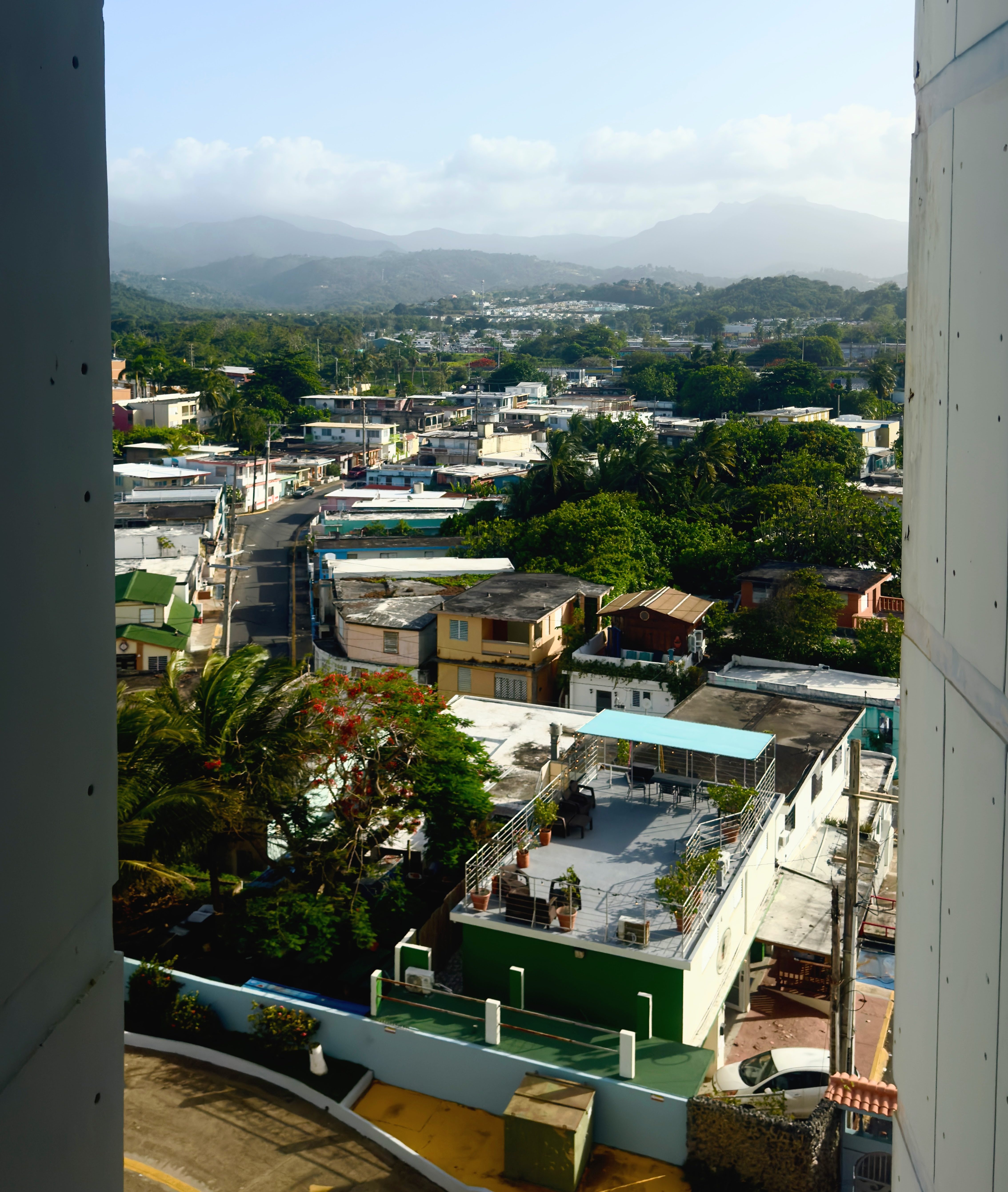
Everybody’s got the fantasy version of this conversation.
You tell somebody you’re thinking about moving back to Puerto Rico and they go, “ay, that must be so much cheaper than here.” And you smile and say “yeah, probably,” without admitting you have no actual idea, because you’ve been running on vibes, hope, and a feeling that the island’s gotta be cheaper than wherever you are now.
Sometimes it is. Sometimes it really isn’t. And the difference usually comes down to one thing: whether you did the math before you packed the boxes, or after.
So siéntate. Let’s do the real math. Not the fantasy. What it actually costs to get there, what it costs to live there, and the bill that ambushes people the second they land.

The Number Everybody Gets Wrong First
Puerto Rico is not cheap. It’s also not expensive. It’s something trickier than either, and that’s exactly what trips up families who move back on vibes.
The mistake is treating the island like a discount version of the mainland. It’s not. It’s a whole different cost structure.
Overall, cost of living runs roughly 8 to 14 percent lower than the US average, depending on the source and the region. (As of 2026.) Sounds great, until you look closer. Because those savings are NOT spread out evenly. Some things are dramatically cheaper. A few things cost more. And the expensive ones are sneaky.
Aquí va la verdad, category by category.
What Actually Gets Cheaper
Housing, that’s where the real savings live. This is the number that makes the whole thing work for most of us. Rents run about 50 percent lower than the US as a whole, and way lower than the expensive cities. A 2-bed in San Juan might run $1,000 to $1,500 a month, versus $2,500 and up in Miami or Nueva York. (As of 2026.)
Coming from Boston or Chicago or NYC, your rent alone could drop $1,000 to $2,000 a month. Over a year that’s $12,000 to $24,000 back in your pocket. Pa la familia, that gap is often the whole financial case for coming home. And outside San Juan, think Ponce, Mayagüez, Aguadilla, it gets even friendlier: more space, quieter, and honestly closer to the Puerto Rico your family remembers than the gentrified Condado version.
Healthcare, generalmente más barato. Care on the island is generally more affordable, and a lot of people mix private insurance with Medicare. If you’re near retirement or carrying an expensive mainland plan, that’s real savings. Pero ojo, most mainland plans don’t fully work on the island. Sort your coverage BEFORE you move, not after. Landing without a plan that works there is one of the most expensive rookie mistakes there is.
Eating local, cheaper de verdad. Shop the farmers markets, buy local produce and pescao, eat where the menu’s only in Spanish and a plate of arroz con habichuelas is like eight bucks, and your food budget drops. The island grows a lot, and the local food culture is real.
This is the shape of it. The actual line-by-line budget for YOUR family, your town, your situation, that’s exactly what I built the guide for.
What’s Gonna Shock You
Now the part most “move to PR” content quietly skips. Con honestidad.
Electricity. This is the big one. Rates run higher than most US states because the grid is what it is. Expect bills of $150 to $300 a month or more, depending on how much AC you run. (As of 2026.) And mija, you’re gonna run the AC. In a place where el verano never really ends, electricity isn’t optional, it’s a fixed cost, and it’s higher than most mainland cities. A lot of returnees eventually go solar. The upfront cost is real, but the long game and that island sun make it worth thinking about, especially if you’re buying.
Groceries, más caro de lo que crees. Packaged goods and brand names run about 10 to 25 percent higher than the mainland, thanks to shipping and the Jones Act, the law that says goods have to come on US ships. (As of 2026.) This is the one that shocks people, porque you’d think food is cheaper closer to where it grows. Local stuff is. But the Stop & Shop and Publix brands you grew up on cost more, because everything that comes on a boat costs more. You adapt, you shop local, you learn the cheaper stores, but budget for a bumpy first six months.
The car. You’re gonna need one, and it costs more here. Public transportation is limited, so most people need a car. Prices run higher because of shipping and import taxes, insurance reflects higher accident and theft rates, and gas runs maybe 20 to 40 cents a gallon over mainland averages. Most people budget $300 to $600 a month for the car all-in: payment, insurance, gas, maintenance. (As of 2026.) And if you’re shipping your current car? That excise tax is its own whole drama, I wrote about that one separately.

The One-Time Bill Nobody Budgets For
Before you even get to monthly costs, you gotta get yourself and your life onto the island. And this is where people get blindsided, porque they obsess over the monthly stuff and forget the one-time move.
Most families spend somewhere between $8,000 and $25,000 to relocate, depending on where you’re coming from and how much stuff you’re dragging. (As of 2026.) A studio in Boston with barely any furniture is a totally different number than a family of four shipping a three-bedroom from Chicago.
Stuff to plan for: shipping your car (roughly $1,200 to $2,500), first and last month’s rent plus deposit (plan two to three months of rent upfront), utility deposits, setting up healthcare, license and registration fees, and any legal or document costs.
The families who pull this off smooth all say the same thing after: they underestimated the one-time costs and overestimated the monthly savings. Plan conservative on both sides and you give yourself room to breathe.
The Number That Changes Everything
Here’s the variable that flips the whole conversation: tu income.
The average monthly net salary in Puerto Rico is around $2,640, versus about $4,252 stateside. (As of 2026.) So if you move back and take a local job at local wages, the math is tight. Affordable relative to what you earn there, but the margin is narrow.
Now if you move back with a remote job at mainland pay? Todo cambia. You’re earning mainland money and living at island costs. That’s the thing that’s made coming home actually possible in a way it never was for our parents. For a family that can pull that off, and more and more can, the case for coming home isn’t just emotional anymore. It’s real math.
Your income, your town, your family size, that’s what decides if this works. The guide has the full budget worksheet so you build YOUR real number, not a vibe.
The Honest Summary
▶Housing will save you money, significantly, especially coming from a big city.
▶Electricity and groceries will cost you more, consistently. Plan for it.
▶You’ll need a car, so budget the whole thing, not just the payment.
▶The one-time move costs more than you think. Give it its own budget.
▶And your income is the biggest lever of all. Remote work at mainland pay is what makes the numbers sing.
Bottom Line, Mi Amor
You can put a number on the cost of living. You can budget the electric bill and the move and the car.
What you can’t really put on a spreadsheet is the other side. Eating tu tía’s cooking on a random Tuesday. Your kids growing up speaking Spanish without an app. Your parents seeing them whenever, not twice a year. Watching el sol go down over the water from a porch that’s actually yours.
The cost of moving back, you can calculate. The cost of not going back is the one that’s harder to add up.
Do the math. Then come home.
This post is for educational purposes only and is not financial advice. Cost figures reflect available 2026 data and vary by location, lifestyle, and situation. Get live quotes and build your own budget before you move.


Leave a Reply